Amharic Typography Crafting
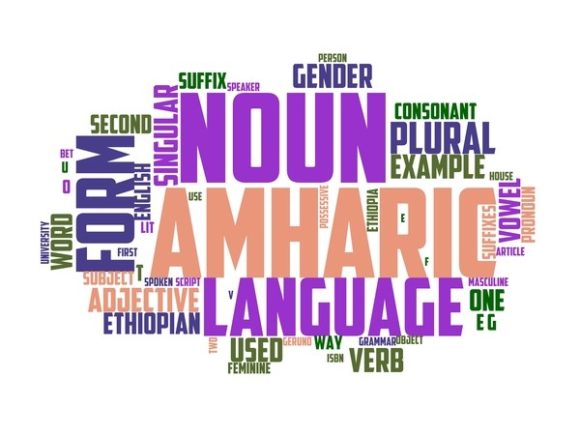
There’s something quietly powerful about seeing your language—its curves, rhythms, and cultural weight—translated into visual form. Amharic Typography Crafting isn’t just about arranging letters; it’s about honoring linguistic identity while building tangible, joyful design tools. At its core, this practice blends traditional Ethiopian script aesthetics with modern hand-drawn expression—resulting in vibrant, emotionally resonant wordclouds that feel both rooted and fresh.
Unlike algorithm-generated clouds, these are crafted by hand: each Amharic character drawn with intention, spaced for breath and balance, then layered with color, texture, and subtle variation. The result? A living typographic composition—not a static image, but a flexible design asset built to carry meaning across surfaces, scales, and contexts.
Why Amharic Typography Crafting Stands Out
Most multilingual design resources prioritize Latin scripts. Amharic Typography Crafting fills a real gap—not as an afterthought, but as a primary creative discipline. Its strength lies in three interlocking qualities:
- Cultural resonance: Every glyph reflects the organic flow of Ge’ez-derived script—rounded consonants, stacked vowels, rhythmic line breaks—rendered with respect, not approximation.
- Visual versatility: Because it’s hand-drawn—not vector-perfect—it adapts beautifully to fabric, ceramic, paper, or screen. Slight irregularities add warmth, making it ideal for artisanal and small-batch production.
- Functional flexibility: These wordclouds aren’t decorative filler. They’re modular. Words can be isolated, resized, recolored, or repositioned without losing integrity—unlike rigid bitmap assets.
This isn’t novelty typography. It’s functional craft: designed to work *with* you, not against you.
Real-World Uses You’ll Reach For Again and Again
Whether you're launching a café in Addis Ababa, teaching Amharic to diaspora youth, or designing merch for a cultural festival, Amharic Typography Crafting delivers practical value—not just aesthetic appeal.
For creators and makers: Print the wordcloud on cotton tote bags or linen pillow covers—the hand-drawn texture translates beautifully to fabric dye and embroidery. On ceramics, the organic lines soften kiln variations instead of fighting them. Even laser-cut wood signs gain depth when characters follow natural stroke weight rather than mechanical uniformity.
For educators and nonprofits: Use individual words from the cloud as flashcards, classroom posters, or storybook illustrations. Because vowel placement is visually clear and consistent, learners grasp phonetic patterns faster. One literacy program in Hawassa reported improved retention when pairing these visuals with oral drills—especially among students who responded better to visual cues than rote repetition.
For marketers and small businesses: Swap out generic “inspiration” quotes for meaningful Amharic phrases—“አስቀድመው አልተሰራም” (It wasn’t done before), “አንድ ሰው ብቻ የማይገነባ” (One person alone cannot build)—and place them on product tags, coffee cup sleeves, or limited-edition packaging. Customers recognize authenticity. They also notice when language feels *lived-in*, not imported.
For digital designers and publishers: Drop layers into Canva, Illustrator, or Affinity Designer. Export at any resolution for e-book chapter headers, magazine pull quotes, or bilingual app onboarding screens. The hand-drawn quality avoids the sterility of system fonts—while remaining legible even at 14pt on mobile.
What to Look for—and What to Skip
Not all Amharic wordclouds serve your goals equally. Here’s how to evaluate what you’re considering:
- Check glyph accuracy first: Does the rendering honor standard Amharic orthography—including proper vowel positioning, conjunct forms, and spacing rules? Avoid assets where ‘ሀ’ and ‘ሐ’ look identical or where vowel diacritics float unnaturally.
- Test scalability: Zoom in. Do strokes hold clarity at 200%? Does thinning or thickening happen intentionally—or does it collapse into mush? Good hand-drawn typography retains structure, even when enlarged.
- Assess color integration: Are hues applied thoughtfully—not just as decoration, but to guide reading order or emphasize semantic weight? In one client project, shifting “እርግዝና” (patience) to deep indigo while keeping “ፍላጎት” (desire) in warm coral created instant emotional contrast—no translation needed.
- Avoid over-compression: Dense, overlapping clouds look dramatic—but rarely print well on textiles or small-format items like business cards. Prioritize versions with intentional negative space, especially if you plan physical output.
Getting Started—Without Overcomplicating It
You don’t need advanced design skills to use Amharic Typography Crafting effectively. Start simple:
- Pick one phrase that matters—something tied to your mission, brand voice, or current campaign.
- Choose a version with clean separation between words (not tangled glyphs). This gives you room to crop, layer, or pair with English text later.
- Try it on two very different surfaces: once on matte paper (for a notebook cover), once on a textured fabric swatch (for a patch or scarf). Notice how light, scale, and material change perception.
- If adapting digitally, convert to vector only *after* finalizing layout—preserving the original hand-drawn nuance as a base layer.
Remember: this isn’t about perfection. It’s about presence. A hand-drawn “ሰላም” on a handmade greeting card carries more warmth than a flawless font rendered at 300dpi. That human trace builds connection—whether your audience speaks Amharic fluently, is learning, or simply responds to beauty rooted in real tradition.
Amharic Typography Crafting invites you to move beyond translation—to interpretation, celebration, and tactile storytelling. It works as hard on a conference banner as it does on a child’s reading chart. And because it’s built for adaptation—not rigidity—it grows with your projects, your audience, and your evolving sense of what design can do.
So go ahead: choose a phrase. Try it on something real. See how it feels—not just how it looks.