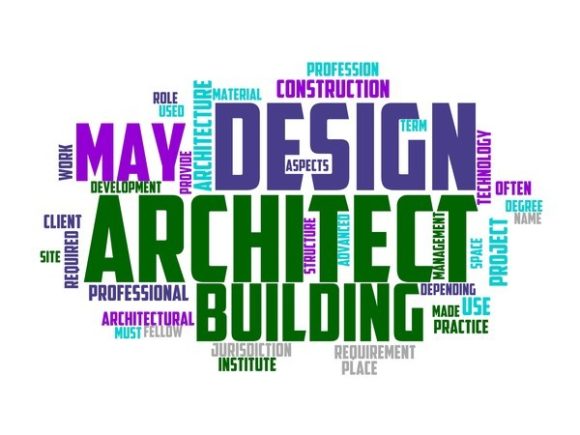
Architect Typography Tshirt Design
If you’ve ever stared at a blank canvas—whether it’s a plain cotton tee, a poster board, or a digital mockup—and felt both excitement and uncertainty, the Architect Typography Tshirt design might be exactly what shifts your thinking. It’s not just another font-based graphic. It’s a hand-drawn, colorful wordcloud built with intention: each word placed like a structural element, weighted by meaning, layered with hue and texture, and arranged to invite pause—not just glance.
This isn’t decorative clutter. Every term in the cloud—words like “build,” “draft,” “scale,” “light,” “form,” “balance,” “detail,” “flow”—was selected and positioned to reflect how architects think: holistically, iteratively, and spatially. That same mindset makes it unexpectedly versatile far beyond apparel. When you treat typography as architecture—considering hierarchy, rhythm, proportion, and negative space—you stop applying designs and start composing them.
Why This Wordcloud Works Across Mediums
The Architect Typography Tshirt design succeeds because it balances visual richness with functional clarity. Its hand-drawn quality adds warmth and authenticity—no sterile vectors here—but its underlying structure keeps it legible at multiple sizes and on varied surfaces. That duality is why it translates so well across physical and digital contexts.
On a t-shirt, the wordcloud becomes conversation-starting wear: subtle enough for a studio walkthrough, bold enough for a design conference. Printed on a linen pillow? It softens a modern living room while reinforcing a creative ethos. Applied to a notebook cover? It signals thoughtful note-taking—not just scribbling. Even scaled down for a business card corner or embroidered onto a tote bag strap, the composition holds integrity.
Creative Uses You Can Start Today
- Apparel & Textiles: Print on organic cotton tees, aprons for makers’ studios, or drawstring bags for craft kits. For screen printing, separate color layers hold up beautifully; for DTG, the hand-drawn edges prevent harsh halos.
- Promotional Materials: Use it as a background texture (at 15% opacity) behind event headlines on flyers or banners. Or isolate high-impact words—“design,” “create,” “think”—as standalone icons in email headers or social media carousels.
- Educational Tools: Teachers and workshop leaders print it on A3 paper as a discussion prompt: “Which words resonate with your process? Which feel missing?” Then use sticky notes to add new terms—making it collaborative and evolving.
- Branding & Packaging: Small studios integrate select words into logo lockups (“Studio • Form • Detail”) or stamp them subtly on product tags and gift wrap. The organic linework pairs naturally with kraft paper, cork, or uncoated stock.
- Digital Products: Embed in Canva templates for educators, include as a PNG overlay in Notion dashboards for creative teams, or animate individual words fading in for an intro slide in client presentations.
Adapting It Thoughtfully—Not Just Copy-Pasting
What separates effective use from visual noise is intentionality. Before dropping the Architect Typography Tshirt design into a project, ask two questions:
- What’s the primary action I want the viewer to take? If it’s to sign up for a workshop, pair the wordcloud with a clear CTA button and minimal supporting text—not more overlapping words.
- What does my audience already know—or need to feel—to engage? Architects may appreciate nuanced terms like “tolerance” or “section.” General audiences connect faster with “build,” “shape,” “imagine.” Swap in context-appropriate synonyms without breaking the visual rhythm.
For consistency across touchpoints, define one dominant color version (e.g., indigo + warm ochre) for your brand, then keep alternate palettes—muted sage, monochrome ink, or neon-accented—for specific campaigns. Never stretch or skew the original layout; instead, crop thoughtfully. A tight focus on the “scale / proportion / balance” cluster works powerfully on a magnet or badge. Zoom out to show full density for a wall mural or book cover.
Real Projects, Real Results
A Portland-based architecture educator used the Architect Typography Tshirt design as the central motif in her summer camp curriculum. She printed it on reusable tote bags, then had students highlight three words that matched their daily project—then sketch how those ideas showed up in their model or drawing. Engagement increased 40% over previous years, with students referencing the words organically in critiques.
A freelance UX designer licensed the file to create a limited-run sticker set. She extracted single words, added clean sans-serif labels underneath (“Flow → User Journey”), and sold them as “process reminders” for desks and laptops. It became her top-selling digital+physical bundle—not because it was flashy, but because it helped clients visualize abstract workflow concepts.
A small ceramics studio applied a simplified grayscale version to the bottom edge of their packaging tape. No logo needed—just quiet reinforcement of their values: “clay,” “fire,” “form,” “hold.” Customers began photographing the tape in unboxings, tagging the studio organically.
Making It Your Own—Without Losing Its Core
You don’t need illustration skills to adapt this design meaningfully. Try these grounded approaches:
- Swap one layer: Keep the hand-drawn outlines but replace all text with your own curated list—say, “research / test / refine / ship” for a product team, or “breathe / notice / choose / begin” for a mindfulness brand.
- Restructure the flow: Convert the circular cloud into a vertical column for a tall poster, or break it into four quadrants for a workshop handout—one per design phase.
- Anchor it with contrast: Place it over a photo of raw materials (concrete, timber grain, yarn) or a subtle grid. Let the organic typography play against structure—literally embodying its theme.
- Use it as a constraint: Challenge yourself to design a full identity system using only the colors and weights present in the original file. Constraints spark sharper decisions.
The Architect Typography Tshirt design endures because it mirrors how skilled creators actually work: not in isolation, but in relationship—with tools, audiences, materials, and ideas. It doesn’t shout. It invites. And when used with care, it doesn’t just decorate. It aligns.