Saxophone Wordcloud Sublimation Tumbler
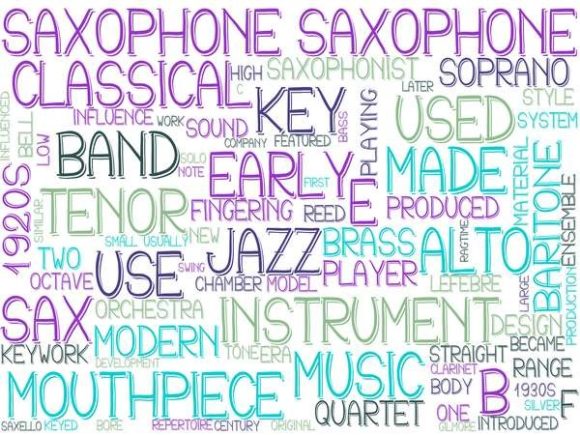
If you're designing for music lovers, jazz educators, band programs, or creative entrepreneurs, a Saxophone Wordcloud Sublimation Tumbler isn’t just a drinkware item—it’s a versatile branding and engagement tool. At its core, it’s a high-resolution, editable word cloud design centered around saxophone-related terms—like “jazz,” “improv,” “reed,” “blues,” “solo,” “phrasing,” and “swing”—optimized for sublimation printing onto tumblers. But what makes it truly useful isn’t just the visual charm; it’s how thoughtfully it integrates into real-world workflows: from classroom giveaways and festival merch to studio-branded client gifts and social media campaign assets.
Why this wordcloud resonates beyond aesthetics
This isn’t generic clipart. A well-crafted Saxophone Wordcloud Sublimation Tumbler design reflects musical literacy—terms are weighted meaningfully (not randomly), typography supports readability at multiple sizes, and spacing allows clean heat-transfer application. That matters because when you print it on a 20 oz tumbler, legibility, color fidelity, and edge-to-edge coverage directly impact perceived professionalism. A rushed or low-res version may look sharp on screen but blur or ghost during sublimation—especially around curved surfaces or near the base rim. Worse, some sellers offer “word clouds” that are flattened raster images (JPG/PNG) with no transparency or layer separation, making customization nearly impossible.
1. Assuming all “sublimation-ready” files actually are
Many listings claim “sublimation compatible” but deliver RGB JPEGs without bleed, margin guidance, or vector alternatives. Sublimation requires precise color profiles (CMYK or sRGB, not generic RGB), proper bleed (usually 0.125”), and ideally, layered PSD or AI files for text adjustments. If your file lacks these, you’ll face color shifts (e.g., deep blues turning purple), cut-off edges, or inability to swap “jazz” for “saxophone ensemble” in your school’s branding. Before downloading or purchasing: check the product description for file types (PSD, AI, EPS, SVG preferred), DPI (300+ at full size), and whether it includes a mockup guide showing wrap dimensions for standard tumbler sizes (e.g., 20 oz skinny vs. 30 oz wide).
2. Overlooking context-specific usability
A wordcloud designed for a glossy tumbler may not translate cleanly to matte ceramic mugs, vinyl stickers, or fabric tote bags—even if the same file is used. The issue? Contrast ratios, font weight, and negative space behave differently across substrates. For example, thin script fonts inside the cloud may vanish on textured tumblers or low-contrast sublimation blanks. Similarly, dense clusters of small words won’t resolve clearly on business cards or magnets. Better approach: Start with a version that offers scalable vector layers and test-print a small batch on your *actual* blank—not just a digital mockup. If you’re using it across multiple applications (e.g., tumblers + postcards + web banners), choose a package that includes optimized variants: one with bolder weights for physical goods, another with simplified hierarchy for social thumbnails.
3. Underestimating licensing scope
Not all Saxophone Wordcloud Sublimation Tumbler assets include commercial use rights—or clarify limitations. Some licenses allow resale of finished products (e.g., selling branded tumblers on Etsy) but prohibit use in logos or SaaS platform interfaces. Others restrict quantity (e.g., “up to 500 physical units”) or forbid redistribution as editable templates. Violating these doesn’t just risk takedowns—it can undermine trust if a client discovers your “custom” branding uses unlicensed, mass-distributed art. Always verify: Is the license perpetual? Does it cover both digital and physical output? Are there attribution requirements? Reputable creators provide clear, plain-language licensing summaries—not just legal jargon buried in fine print.
What to check before committing
- Color mode & profile: Confirm it’s delivered in sRGB (standard for sublimation) and includes a color guide matching common sublimation ink sets (e.g., Sawgrass Virtuoso).
- Font licensing: If custom or stylized fonts are embedded, ensure they’re either outlined (converted to shapes) or accompanied by licensed-use documentation. Unlicensed fonts can trigger copyright flags in print-on-demand platforms.
- Real-world sizing notes: Look for tumbler-specific guides—e.g., “Safe zone: keep key terms within 4.5″ height x 8.25″ width for 20 oz skinny tumblers.” Generic “fits most tumblers” claims rarely hold up.
- Support & updates: Does the creator offer quick replacements if a file is corrupted? Do they update designs seasonally (e.g., adding “back to band” or “jazz camp 2025” terms)? That signals reliability—not just transactional sales.
Getting more out of your Saxophone Wordcloud Sublimation Tumbler
This design shines when treated as a system—not a one-off. Use the same core word cloud across touchpoints: shrink and simplify it for a business card corner, extract key phrases (“improv,” “tone,” “expression”) for Instagram story highlights, or recolor sections for A/B testing email banner variants. Educators repurpose it as a vocabulary anchor in lesson plans; studio owners add student names as subtle “words” inside the cloud for recital keepsakes. The flexibility comes from intentional structure—not decorative clutter.
One practical tip: If you’re building a brand identity around music education, pair the wordcloud with complementary elements—a minimalist sax icon, consistent type scale, and a restrained palette (e.g., charcoal, warm brass, cream). That cohesion makes your Saxophone Wordcloud Sublimation Tumbler feel like part of a thoughtful ecosystem—not an isolated promo item.
Ultimately, the best Saxophone Wordcloud Sublimation Tumbler assets don’t just look good—they save time, reduce rework, and scale gracefully across your real work: teaching, selling, promoting, or creating. Choose for clarity over complexity, compatibility over convenience, and longevity over trendiness. When those foundations are solid, your tumblers—and every other application—carry more than a message. They carry intention.