Watercolor SPA Sublimation. Zen. Beauty
If you’ve ever scrolled through design marketplaces or browsed spa branding assets, you’ve likely seen soft-edged bamboo stalks, misty stone therapy illustrations, or tranquil watercolor washes evoking thalassotherapy and aromatherapy—often labeled as “Watercolor SPA Sublimation. Zen. Beauty.” This isn’t just a decorative phrase. It’s a highly intentional visual language: one that merges mindful aesthetics with functional versatility for wellness professionals, boutique brands, and creators who value authenticity over cliché.
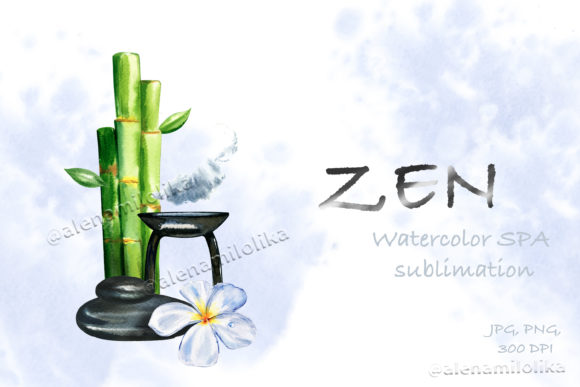
At its core, Watercolor SPA Sublimation. Zen. Beauty refers to high-resolution, print-ready artwork—like the 13.8 × 18.5 inch, 300 DPI PNG/JPG composition featuring bamboo, folded bath towels, and a natural marine sponge—designed specifically for sublimation printing, digital marketing, and premium physical collateral. Its purpose? To help spas, sauna studios, holistic practitioners, and self-care entrepreneurs communicate calm, craftsmanship, and care—without relying on overused stock tropes like generic lotus flowers or cartoonish lavender sprigs.
Why this matters—and where things go sideways
Many buyers assume “watercolor” means “ready to use,” but that’s only half true. Watercolor texture adds warmth and tactility—but it also introduces variables: transparency layers, subtle grain, and pigment bleed that behave differently across substrates. A common misstep? Using the file for direct screen display without checking color mode. RGB works for web, but sublimation requires CMYK-optimized files with embedded profiles—or your serene bamboo greens may shift toward olive or teal mid-print.
Another overlooked detail: scale fidelity. That 13.8 × 18.5 inch size is ideal for large-format prints (think wall art for reception areas or oversized postcards), but it’s overkill—and potentially pixelated—if scaled down to social media banners or email headers without proper resampling. Some users try to stretch the image into square Instagram posts, losing resolution and softening the delicate watercolor edges that make the piece feel hand-painted rather than digital.
What gets missed in the rush to download
It’s easy to focus on the visual appeal and skip practical checks. Before adding Watercolor SPA Sublimation. Zen. Beauty to your cart or creative workflow, pause and verify three things:
- File format compatibility: Does your printer or design software support layered PNGs with transparency? If you’re using it for sublimation on ceramic mugs or bamboo trays, flat JPGs often perform more predictably than PNGs with alpha channels—unless your RIP software explicitly handles them.
- Intended use alignment: Is your goal digital (e.g., an e-book cover or webinar slide) or physical (e.g., printed booklet inserts or heat-transfer apparel)? The same file can excel in one context and disappoint in another—not due to quality, but mismatched expectations.
- Licensing clarity: Does the license permit commercial use for client projects, or only personal branding? Many creators assume “for sale” implies full rights—only to discover later that resale of derivative products (like pre-printed towel sets using the artwork) requires extended licensing.
One real-world example: A small-batch skincare brand ordered custom bamboo bathrobes and used the Watercolor SPA Sublimation. Zen. Beauty illustration as a chest logo. They loved the organic flow—until the final print revealed faint haloing around the sponge outline. Why? The original file had a slight drop shadow layer intended for magazine layout, not fabric sublimation. A quick flattening step before sending to the printer would’ve preserved crispness without sacrificing mood.
Better choices start with intention—not impulse
Instead of treating Watercolor SPA Sublimation. Zen. Beauty as interchangeable wallpaper, treat it like a collaborator. Ask: What feeling do I want a guest to feel when they first see this? Calm? Grounded? Renewed? Then match technique to tone. For instance:
- Use the full 300 DPI resolution for printed materials—brochures, business cards, or framed wall art in waiting rooms—where texture and detail reward close viewing.
- For digital use, export a separate web-optimized version (72 DPI, sRGB, compressed JPG) with simplified contrast—so the bamboo remains legible even on mobile screens with auto-brightness adjustments.
- When adapting for product labels or packaging, isolate key elements (like the marine sponge or single bamboo stem) using selection tools—not cropping—to retain proportional harmony and avoid awkward white space.
And remember: Zen isn’t just a style—it’s a principle of restraint. Over-layering this artwork with heavy fonts, gradients, or competing icons dilutes its quiet strength. Let the watercolor breathe. Pair it with clean sans-serif typefaces, ample margins, and muted palettes inspired by sea glass or river stones—not neon coral or electric mint.
A note on authenticity and sourcing
Not all “zen” visuals carry the same depth. Generic AI-generated spa illustrations often lack the subtle imperfections that signal human intention: the faint granulation where pigment pools, the slight variation in bamboo node spacing, or the gentle asymmetry of folded towels. Those details build trust. When your audience sees craftsmanship—even in a digital asset—they subconsciously associate it with your brand’s integrity.
That’s why creator credits matter. Tagging @alenamilolika on Instagram isn’t just polite; it connects viewers to the origin story—the actual healthy lifestyle inspiration behind the piece, the studio practice, the material research into sustainable marine sponges and FSC-certified bamboo. That transparency strengthens your own credibility, especially if you serve wellness-conscious clients aged 30–50 who prioritize values-aligned partnerships.
Finally, don’t underestimate the power of context. This composition shines brightest when paired with thoughtful copy—not just “Relax with us,” but “Breathe deeper. Feel the weight lift. Your skin, your rhythm, your time—honored here.” Watercolor SPA Sublimation. Zen. Beauty doesn’t replace messaging. It deepens it. Used well, it becomes part of your brand’s quiet voice—not background noise.