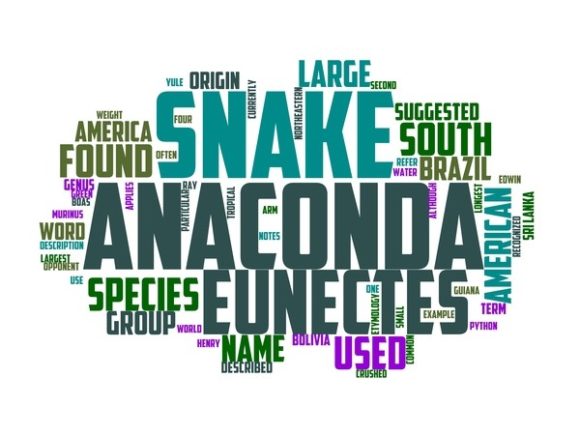
Anaconda Typography Book Cover: A Vibrant Word Cloud for Creative Expression
If you've seen the Anaconda Typography Book Cover, you’ve likely noticed its joyful energy—the hand-drawn letters, the playful color layering, the organic flow of words like “inspire,” “create,” “bold,” and “grow” woven into a cohesive visual rhythm. It’s not just a book cover; it’s a versatile design asset built for makers who value authenticity, warmth, and tactile charm. Whether you're printing on cotton tees, embossing onto notebook covers, or layering onto digital invitations, this word cloud bridges craft and communication—without needing advanced design skills.
What It Is (and What It’s Not)
The Anaconda Typography Book Cover is a high-resolution, scalable vector-based word cloud—designed by hand, then digitized with care. Its strength lies in intentional imperfection: slight variations in line weight, subtle watercolor textures, and thoughtful spacing that invites the eye to wander—not scan. It’s optimized for both print and digital use, supporting CMYK and RGB workflows, and includes clean outlines and editable layers in standard formats (AI, EPS, SVG, PNG).
It’s not a generic AI-generated word cloud with uniform fonts and flat colors. Nor is it a single-use template locked into one layout. Misunderstanding this leads directly to the most common missteps—especially when people assume it works “out of the box” for every surface or medium without adjustment.
1. Assuming It Translates Perfectly to All Fabrics Without Testing
Many creators order fabric prints—tote bags, pillow covers, or apparel—using the Anaconda Typography Book Cover at full size, only to find fine details blur or bleed during dye-sublimation or screen printing. Hand-drawn linework relies on contrast and clarity; small text elements like “curious” or “wonder” can vanish if scaled too small or printed on low-contrast textiles (e.g., heather gray or oatmeal linen).
Better approach: Always request a physical proof from your printer—or run a test swatch at 75% and 125% of your intended size. Zoom in on edges in your editing software: if “joyful” looks muddy or “imagine” loses its inner curve, simplify or reposition that cluster. For apparel, consider isolating the top third of the word cloud (larger, bolder words) as your primary focal point—then use the rest as secondary texture or background fill.
2. Overlooking Color Mode and Output Intent
Downloading the Anaconda Typography Book Cover in RGB for commercial offset printing is a quiet but costly error. RGB offers broader digital vibrancy—but CMYK conversion often dulls saturated pinks or deep teals, especially in packaging or magazine spreads. Worse, some users skip checking embedded color profiles entirely, leading to mismatched brand palettes across products (e.g., a mug and matching postcard showing noticeably different “sunrise coral”).
Better approach: Before finalizing any file for production, verify the color mode in your software (Edit > Convert to Profile in Illustrator, or Image > Mode > CMYK in Photoshop). If you’re designing for multiple outputs (e.g., social banners + embroidered patches), keep two versions: one RGB-optimized for screens, one CMYK-calibrated for print—with named swatches matching your brand guide. And always name layers meaningfully (“Outline_Only,” “Color_Fill_Group”) so collaborators (or future-you) can adjust efficiently.
3. Using It as Standalone Branding—Without Supporting Visual Language
The Anaconda Typography Book Cover shines when paired with complementary elements: a simple sans-serif body font for captions, neutral backgrounds, or restrained iconography. But some entrepreneurs drop it onto a business card or website hero section alone—and wonder why messaging feels scattered or unprofessional. Word clouds communicate mood and theme, not hierarchy or function. Without clear typographic contrast or intentional whitespace, “innovate,” “trust,” and “craft” compete instead of collaborate.
Better approach: Treat the Anaconda Typography Book Cover as your visual headline—not your entire sentence. Pair it with a clean, legible typeface (like Inter, Lato, or Source Sans Pro) for body copy and calls-to-action. Use consistent margins (at least 10% padding around the word cloud on all sides) and limit additional decorative elements to one accent color drawn from the design itself. For example, pull the exact hex code from the “brave” loop’s teal stroke—and use it only for buttons, borders, or subheadlines.
Before You Download, Print, or Pitch—Check This List
- Licensing scope: Does your license cover commercial use on physical goods (e.g., selling mugs with the design)? Some versions restrict resale—check the terms before listing on Etsy or launching a Shopify store.
- File organization: Are layers labeled and grouped logically? Unlabeled paths make resizing or recoloring frustrating—and time-consuming.
- Scalability test: Open the file at 200% zoom. Do strokes remain crisp? Do overlapping letters retain separation? If “passion” and “patience” merge into unreadable blobs, that version may not be ideal for small-format items like stickers or jewelry tags.
- Contrast ratio: Run a quick check using WebAIM’s Contrast Checker if placing text over part of the word cloud (e.g., overlaying an event date). Even beautiful designs must remain legible.
- Intended audience alignment: Does the warmth and handmade feel match your brand voice? A fintech startup might find it charming—but a law firm may prefer something more grounded. Trust your instinct here.
Why Thoughtful Use Matters More Than Trendiness
Design assets like the Anaconda Typography Book Cover succeed not because they’re “on-trend,” but because they resonate with intention. When used well—tested, adapted, and anchored in real-world context—they become quiet ambassadors for creativity. They show up on a teacher’s classroom poster and spark conversation. They live on a therapist’s waiting-room pillow and soften a clinical space. They appear on a small-batch candle label and signal care in sourcing and storytelling.
That resonance doesn’t happen automatically. It happens when you pause before scaling, question assumptions about color or placement, and treat the design as a collaborator—not just decoration. You don’t need advanced training to do this. You just need curiosity, a few minutes to test, and willingness to adjust based on how it actually looks—not how you imagined it would.
So go ahead: get crafty. Print it. Stitch it. Emboss it. But do it with attention—not just enthusiasm. Because the most inspirational products aren’t just colorful or clever. They’re considered.