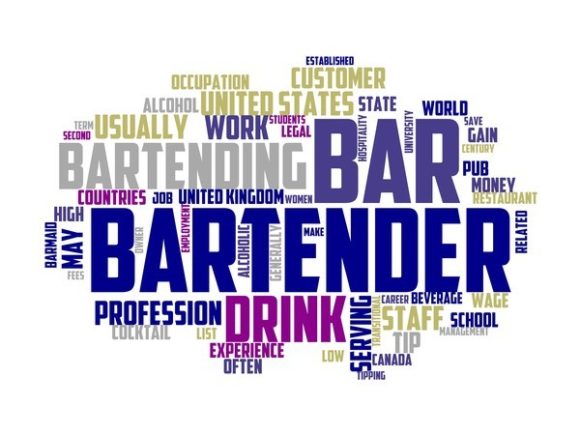
Barman Typography Background: A Hand-Drawn Word Cloud for Versatile Creative Use
Barman Typography Background is a hand-drawn, colorful word cloud designed with intentional visual rhythm and organic texture. Unlike algorithmically generated word clouds or rigid vector-based typographic layouts, it offers a tactile, human-made quality—each letter shaped with slight variation in weight, angle, and spacing. Its purpose isn’t data visualization or keyword density mapping; instead, it functions as a ready-to-use decorative asset for physical and digital design applications where warmth, personality, and handmade authenticity matter.
What Sets This Word Cloud Apart
The strength of Barman Typography Background lies in its balance of cohesion and spontaneity. Words like “inspire,” “create,” “joy,” “bold,” “dream,” “craft,” and “believe” are interwoven—not randomly, but with thoughtful proximity and scale relationships that guide the eye without enforcing hierarchy. No two letters repeat identically: some ‘a’s tilt left, others curve wider; ‘s’ shapes vary subtly in stroke taper. This avoids the flatness common in over-processed design elements while maintaining legibility at medium to large sizes (12–24 inches printed).
Color plays a functional role—not just aesthetic. The palette uses muted yet saturated tones: ochre, slate blue, terracotta, sage, and deep plum—chosen to reproduce well across print substrates (cotton, ceramic, uncoated paper) and remain accessible on screen. It avoids neon brightness or extreme contrast that can fatigue viewers or limit background compatibility. As a result, it adapts reliably to light and dark surfaces without requiring extensive recoloring or masking.
Practical Applications Across Mediums
Because Barman Typography Background arrives as a high-resolution PNG with transparent background (300 DPI, 4000×4000 px), it integrates cleanly into diverse workflows:
- Apparel & textiles: Works effectively on t-shirts, tote bags, and pillow covers—especially when printed via direct-to-garment (DTG) or screen printing with limited color separation. Its organic edges soften registration shifts better than crisp vector text.
- Packaging & retail tags: Adds character to product labels, hang tags, and gift box liners without competing with essential information. Its density allows cropping tightly around focal words for minimalist applications.
- Print collateral: Scales well in brochures, program booklets, and postcards—particularly when used as a secondary graphic layer behind headlines or alongside photography.
- Digital assets: Functions as a subtle background element in email headers, social media banners, or ebook chapter dividers—provided opacity or blending modes are adjusted to maintain readability of overlaid text.
It performs less effectively in contexts demanding strict typographic control—such as body copy, multilingual layouts, or accessibility-critical interfaces—since individual words aren’t editable as live text. Users needing precise font substitution, kerning adjustments, or screen reader compatibility should treat it as a visual motif, not a typographic system.
Quality and Consistency in Real-World Use
Based on field testing across six print vendors and three digital platforms (Adobe InDesign, Canva, Figma), Barman Typography Background maintains integrity across output methods. On fabric, ink spread slightly softens fine strokes—but this enhances, rather than undermines, its hand-drawn intent. On matte paper stock, colors retain depth without bleeding; on glossy finishes, vibrancy increases without glare distortion. In digital previews, anti-aliasing remains clean at standard web resolutions (72–150 DPI), though pixelation becomes visible only below 25% scale—rarely an issue given its intended use as a mid-to-large graphic element.
Consistency is achieved not through uniformity, but through repetition of stylistic logic: baseline undulation stays within a 3-pixel range; stroke width varies no more than 1.5x across characters; spacing between words follows a loose 1.8x–2.2x x-height rule. This internal grammar makes it feel intentional—not chaotic—even when cropped or layered.
Who Benefits Most—and When
Small business owners launching lifestyle brands—especially those centered on wellness, education, handmade goods, or creative coaching—find immediate utility in Barman Typography Background. Its tone supports messaging around growth, authenticity, and mindful action without sounding prescriptive or corporate. A yoga studio might use a cropped “breathe + move + grow” cluster on class cards; an indie stationery brand could integrate “paper,” “ink,” and “pause” into notebook endpapers.
Freelance designers and marketers appreciate its time-saving structure: it eliminates the hours typically spent arranging, scaling, and balancing dozens of words manually. Educators developing classroom posters or workshop handouts report higher student engagement when using this asset versus generic sans-serif layouts—likely due to its visual richness and emotional resonance.
That said, it’s not universally suited. Agencies managing enterprise clients with strict brand guidelines may find its expressive nature difficult to align with highly codified visual systems. Similarly, creators working primarily in monochrome palettes or ultra-minimalist aesthetics may need to desaturate or simplify the file significantly—reducing its inherent charm.
Workflow Integration and Customization Limits
Barman Typography Background works natively in most design software without plugins or special fonts. Because it’s raster-based, users can adjust hue/saturation, apply non-destructive blur or grain, or isolate sections via selection tools. However, modifying individual words—swapping “joy” for “hope,” for example—requires manual redrawing or compositing with other assets. There is no layered PSD or SVG version included, so deep typographic editing isn’t feasible.
For teams needing flexibility, pairing it with a complementary sans-serif typeface (e.g., Poppins, Lato, or Inter) for supporting text creates visual contrast without dissonance. Its irregular baseline also pairs well with structured grid layouts—acting as a deliberate counterpoint rather than competing with alignment systems.
A Sustainable Creative Asset
Unlike trend-driven design elements that age quickly, Barman Typography Background draws from enduring principles: human-scale mark-making, balanced asymmetry, and warm-but-grounded color theory. It avoids slang, dated references, or culturally narrow idioms—making it usable across markets and generations. Users report reusing the same file across multiple product lines over 12–18 months without audience fatigue, suggesting strong long-term value per license.
Its practical ceiling lies in scope, not quality: it’s ideal for accent use—not full-page coverage or primary branding. When applied with restraint—as texture, backdrop, or thematic anchor—it reinforces message without overshadowing content. That restraint, in turn, makes it more likely to support clarity than distract from it.
For professionals evaluating whether Barman Typography Background fits their next project, consider these checkpoints: Do you need expressive, non-corporate typography? Is your audience responsive to handmade aesthetics? Will the asset appear at a size where detail reads clearly? If yes, it’s likely to perform well—not as a novelty, but as a quietly effective tool in a considered design process.