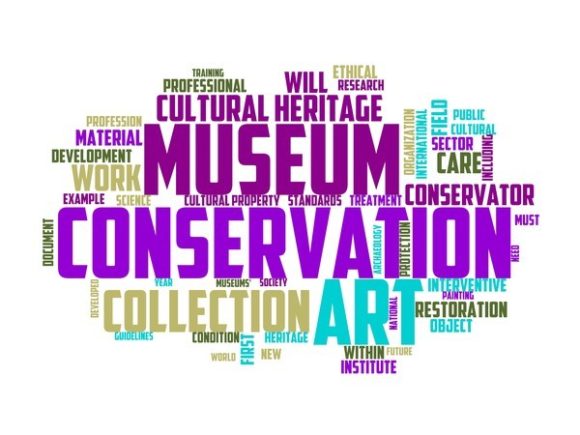
Art Restorer Typography Background: A Strategic Design Asset for Purpose-Driven Creators
Art Restorer Typography Background isn’t just another decorative element—it’s a thoughtfully composed, hand-drawn wordcloud built from evocative, colorful language that carries emotional resonance and thematic clarity. Unlike generic clipart or algorithmically generated clouds, this background is crafted with intention: each word is selected, scaled, and placed to support meaning—not merely fill space. Its value lies not in ornamentation alone, but in how it functions as a visual anchor for communication, identity, and action.
Why This Background Fits Real Work—Not Just Aesthetic Trends
When you’re designing a workshop flyer, packaging for an artisanal product, or a keynote slide deck for educators, every visual choice signals something about your priorities. Art Restorer Typography Background communicates care, craftsmanship, and human-centered thinking—qualities increasingly rare in mass-produced design assets. It works because it’s legible at a glance yet rewards closer attention; its hand-drawn texture invites warmth and authenticity, while its structured composition maintains professionalism.
This matters strategically: consumers and collaborators don’t respond to “pretty” in isolation—they respond to coherence. A brand that uses Art Restorer Typography Background on business cards, then repeats its core words (“restore,” “create,” “intention,” “craft”) across social banners and email headers builds recognition through consistency—not repetition. That’s branding rooted in narrative, not just color palettes.
Where It Delivers Measurable Value—Beyond Decoration
Consider these practical applications—and the outcomes they support:
- Product packaging and textile design: When printed on tote bags or ceramic mugs, the wordcloud becomes part of the user experience—not background noise, but a quiet affirmation. A yoga studio using “breathe,” “align,” “hold,” and “release” on cotton tags reinforces practice philosophy without instruction.
- Educational materials and program guides: Teachers and trainers embed key concepts directly into handouts or slide backgrounds. Students recall ideas more readily when terminology appears visually embedded—not isolated in bullet points.
- Small business marketing collateral: A local bookstore using “curate,” “wander,” “discover,” and “belong” across postcards and window decals strengthens positioning—not as a retailer, but as a cultural hub.
- Scrapbooking and printables for creators: Because the background is resolution-independent and designed for layering, it adapts cleanly to both digital planners and letterpress invitations—reducing production friction while preserving voice.
The common thread? Art Restorer Typography Background supports goals by making abstract values tangible—without requiring explanation.
Using It With Intention—Not Just Convenience
Deploying this background effectively begins with alignment—not aesthetics. Ask yourself before applying it:
- What outcome do I want this piece to support? Is it awareness? Trust? Engagement? Clarity? If the answer is vague (“make it look nice”), pause. Art Restorer Typography Background gains power when tied to purpose—not applied as default filler.
- Which words matter most—and are they already central to my messaging? The background includes terms like “restore,” “refine,” “honor,” “renew,” and “preserve.” If those don’t reflect your mission—or worse, contradict it—you’ll dilute rather than amplify your message.
- How will this appear in context? On a dark notebook cover, light-colored text may need subtle drop shadows. For embroidery or screen printing, simplify layers first—test contrast and scale at actual size. Intentional use means adapting the asset, not forcing it into unsuitable formats.
Without this kind of forethought, even a well-designed background can undermine credibility. Imagine a financial advisory firm using “play,” “dream,” and “spontaneous” across client reports—words that clash with expectations of diligence and precision. Context shapes interpretation. Art Restorer Typography Background doesn’t override audience assumptions; it either confirms or contradicts them.
Planning Tips for Long-Term Utility
Treat this background as infrastructure—not decoration. Here’s how experienced designers and marketers integrate it sustainably:
- Build a usage guide—not just a style guide. Note where the background performs best (e.g., “works reliably on light substrates up to 1200 dpi; avoid full-bleed use on textured paper without pre-testing”). Document what’s been tested, not just what looks good on screen.
- Map words to customer journey stages. “Begin,” “explore,” and “ask” fit welcome emails. “Deepen,” “reflect,” and “integrate” suit mid-program resources. “Share,” “teach,” and “lead” align with graduation materials. Let the typography serve progression—not just presence.
- Reserve variants for distinct audiences. A version emphasizing “learn,” “practice,” and “grow” resonates with students. One highlighting “launch,” “scale,” and “sustain” speaks to founders. Subtle shifts in emphasis create relevance without redesign.
This level of planning transforms Art Restorer Typography Background from a one-off graphic into a scalable communication tool—one that evolves with your work instead of aging alongside trends.
Risks of Misalignment—And How to Avoid Them
The biggest risk isn’t technical—it’s strategic drift. Using Art Restorer Typography Background because it’s available, or because others are, invites inconsistency. You might unintentionally signal values you don’t uphold (“trust,” “transparency”) while delivering opaque processes. Or you might overuse it—so that “restore” appears on invoices, error messages, and shipping labels, eroding its weight through repetition.
Another risk is aesthetic overload. Because the background is rich in detail and color, pairing it with busy layouts, dense typography, or competing illustrations creates visual competition—not harmony. The remedy isn’t less background, but better framing: use generous whitespace, limit supporting fonts to one clean sans-serif, and let the hand-drawn quality breathe.
Finally, consider accessibility. While the background itself isn’t meant to be read linearly, ensure any overlaid text meets WCAG contrast standards (4.5:1 minimum). Never rely solely on color to convey meaning—especially when words like “clarity” or “focus” appear in pale yellow on off-white.
Thinking Beyond the Download—Toward Meaningful Integration
Art Restorer Typography Background succeeds not because it’s beautiful—but because it invites thoughtful engagement. Professionals who get the most from it treat it like a collaborator: they edit its application, test its impact, and refine its role over time. They don’t ask, “Where can I put this?” They ask, “What does this help me say—and what do I need to say next?”
That mindset separates tactical execution from strategic design. Whether you’re launching a new course, rebranding a service, or creating a limited-run apparel line, the background becomes most valuable when it reflects decisions already made—not when it substitutes for them.
So before opening your design software: clarify your objective. Name the core idea you want people to carry away. Then choose whether Art Restorer Typography Background helps express that idea—or distracts from it. That distinction—between support and substitution—is where real creative leverage lives.