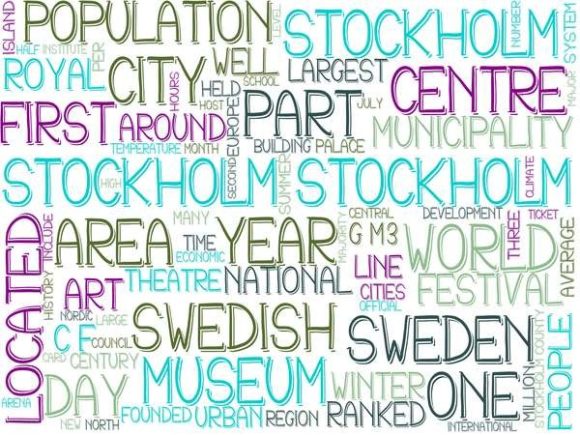
Stockholm Wordcloud Print
Stockholm Wordcloud Print is a versatile, high-resolution word cloud design rooted in Scandinavian minimalism—clean lines, balanced typography, and intentional negative space. Unlike generic word clouds generated by algorithmic tools, it’s a curated visual asset: pre-designed, print-ready, and purpose-built for real-world application across physical and digital workflows. It’s not just decoration—it’s a functional communication tool that anchors messaging, reinforces themes, and adds cohesion to projects where language and visual identity intersect.
Where Stockholm Wordcloud Print Fits in Your Workflow
Think of Stockholm Wordcloud Print as a bridge—not a starting point or an endpoint, but a connective element that gains value at multiple stages of a project. Before launching a campaign, it helps crystallize core messaging by visually prioritizing key terms (e.g., “sustainability,” “community,” “craft,” “local”) in proportion to their strategic weight. During execution, it serves as a consistent visual anchor across touchpoints—ensuring your invitation, social post, and printed brochure all speak the same thematic language. After delivery, it becomes part of your brand archive: reusable, adaptable, and traceable across iterations.
This flexibility means it integrates cleanly into existing systems. Designers drop it into Figma or Adobe Creative Suite as layered vector or high-DPI PNG assets. Marketers import it directly into Mailchimp templates or Canva campaigns without resizing or reformatting. Educators embed it in Google Slides or Notion course pages to reinforce learning objectives. No plugin, no conversion step—just drag, scale, and align.
Practical Use Cases Across Roles and Outputs
For small business owners launching a seasonal promotion, Stockholm Wordcloud Print replaces fragmented copy decisions with a single, scalable visual summary. Instead of writing separate taglines for banners, email headers, and Instagram carousels, you build around the word cloud—pulling phrases like “hand-poured,” “small-batch,” and “refill-friendly” directly from its layout. That consistency reduces revision cycles and strengthens recall.
Freelancers and agencies use it as a client-facing alignment tool. Presenting the word cloud early in discovery—before logo sketches or web wireframes—creates shared understanding. Clients respond more concretely to visual hierarchy than abstract briefs. If “trusted,” “fast,” and “transparent” dominate the cloud, the entire project scope tightens around those values—from tone-of-voice guidelines to UI microcopy.
Hobbyists and educators apply it differently—but just as effectively. A scrapbooking enthusiast layers it behind vintage paper textures for themed memory books. A science teacher prints it on cardstock, cuts out individual words, and uses them in vocabulary sorting activities. In both cases, the asset isn’t consumed—it’s adapted, cut, combined, and reused without loss of fidelity.
Integration With Other Tools and Assets
Stockholm Wordcloud Print works best when treated as part of a modular toolkit—not a standalone solution. Pair it with:
- Typography systems: Its clean sans-serif base pairs naturally with fonts like Inter, Lato, or IBM Plex Sans—making it easy to extend into full typographic hierarchies for websites or reports.
- Color palettes: The design includes subtle grayscale variants and optional accent overlays, so it adapts to brand colors without requiring recoloring in Photoshop.
- Print production pipelines: Supplied in CMYK-optimized PDF and bleed-ready EPS formats, it moves seamlessly into commercial print workflows—no RGB-to-CMYK surprises, no missing fonts, no rasterization issues.
- Digital publishing platforms: Optimized SVG and WebP versions load quickly in WordPress, Squarespace, and Shopify themes—without triggering Core Web Vitals warnings.
It also complements—not competes with—AI-assisted tools. Use ChatGPT or Claude to draft keyword lists based on audience research or SEO data, then feed that list into Stockholm Wordcloud Print’s editable template. The AI handles volume and variation; the word cloud handles balance, emphasis, and aesthetic coherence.
Implementation Tips for Real Workflows
Start with intent, not aesthetics. Before selecting a version or adjusting sizing, ask: What action should this prompt? Is it meant to inform (e.g., a conference program), persuade (e.g., a product launch banner), or invite reflection (e.g., a workshop handout)? Let function drive placement, scale, and contrast—not just what “looks nice.”
Respect hierarchy in multi-format use. If using the same cloud across a tri-fold brochure and a 48" poster, don’t simply scale up. For large formats, increase line spacing and simplify surrounding elements to preserve legibility. For small formats (like business cards or magnets), isolate the top 3–5 weighted words and use them as standalone typographic accents instead of forcing the full layout.
Build reuse into your file naming and organization. Save versions with clear, descriptive names: stockholm-wordcloud-print_sustainability_campaign-v2_cmyk.pdf, stockholm-wordcloud-print_education_vocabulary-webp.svg. Avoid “final_final_v3_revised.” Consistent naming saves time during audits, client revisions, or year-over-year updates.
Test contrast early—especially for accessibility. Even minimalist designs can fail WCAG 2.1 AA standards if light gray text sits on off-white backgrounds. Use browser extensions like axe or Stark to verify contrast ratios before sending files to print or publishing to live sites.
Long-Term Value and Quality Control
Stockholm Wordcloud Print supports sustainability in two practical ways: material and operational. Physically, its optimized file sizes reduce bandwidth and storage use over time—critical for teams managing hundreds of marketing assets. Operationally, its consistency reduces decision fatigue. When the same visual shorthand appears across quarterly reports, investor decks, and internal training slides, teams spend less time debating “what goes first” and more time executing.
To maintain quality across uses, treat it like any other brand asset: document usage rules. Specify minimum clear space, acceptable background colors, prohibited distortions (e.g., stretching width-only), and preferred export settings for different outputs. Share that documentation with contractors, interns, or cross-departmental collaborators—so fidelity stays intact, even when you’re not in the room.
Over time, track how often it’s used—and where it’s most effective. Is engagement higher on social posts featuring the word cloud versus standard banners? Do workshop participants retain concepts better when the cloud appears in both slide decks and printed handouts? These observations inform future iterations—not just of the word cloud itself, but of your broader content strategy.
Getting Started Without Overcomplicating
You don’t need a formal rollout plan to begin. Pick one upcoming task where clarity of message matters: a team retreat agenda, a product feature announcement, or a personal goal tracker. Download the Stockholm Wordcloud Print file, open it in your usual editor, and replace the sample words with your own—keeping the top three weighted terms intact to preserve visual balance. Export, place, and ship. Notice how much faster the layout phase feels when the structure already exists.
That’s the quiet advantage: it doesn’t replace thinking—it accelerates alignment. It doesn’t eliminate choice—it narrows options to the ones that matter most. And because it’s built for real tools, real deadlines, and real constraints, it stays useful long after the initial download.