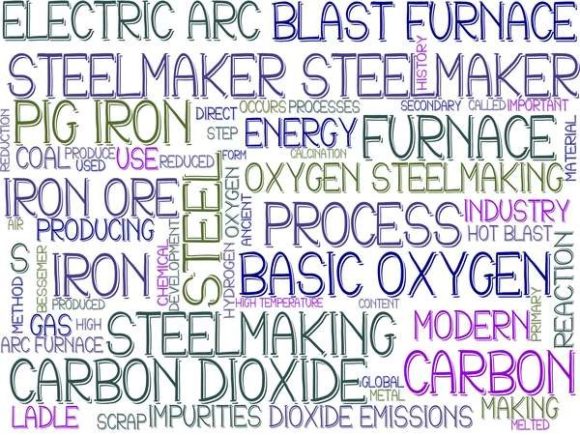
Steelmaker Wordcloud Book Cover
If you're designing a book—whether it's a memoir, poetry collection, academic monograph, or self-published novel—the cover isn’t just packaging. It’s your first impression, your silent salesperson, and often the deciding factor in a crowded digital or physical shelf. That’s where the Steelmaker Wordcloud Book Cover stands out—not as a generic template, but as a thoughtfully crafted, highly adaptable visual tool built for meaning *and* impact.
At its core, the Steelmaker Wordcloud Book Cover is a typographic design asset that transforms key themes, emotions, or concepts from your book into an elegant, balanced word cloud. Unlike basic word clouds that prioritize frequency over form, this version uses intelligent weighting, refined typography, subtle gradients, and intentional negative space to create something that feels both literary and contemporary. It’s not just words arranged—it’s narrative architecture made visible.
Why This Word Cloud Works Where Others Fall Short
Most word clouds sacrifice legibility for density or aesthetics for clarity. The Steelmaker Wordcloud Book Cover avoids that trade-off. Its font pairing—often a strong serif for anchor terms and a clean sans-serif for supporting phrases—ensures readability at multiple sizes, from thumbnail previews on Amazon to full-bleed print on a hardcover spine. The color palette is deliberately restrained: deep charcoals, warm iron greys, or muted metallics that echo the “steelmaker” metaphor—resilient, precise, grounded.
It’s also built with real-world production in mind. Vector-based layers mean no pixelation when scaled for a 36" poster or a 2" sticker. CMYK-optimized swatches guarantee accurate printing across offset, digital, and POD (print-on-demand) platforms. And because it’s delivered with editable source files (AI, EPS, PSD), you’re never locked into one layout—you can adjust emphasis, swap synonyms, or reposition phrases without starting over.
More Than Just a Book Cover—A Design System Starter
Once you have the Steelmaker Wordcloud Book Cover, you’ve got a ready-made visual language—not just for your book, but for your entire project ecosystem. Think of it as your brand’s semantic anchor.
- Promotions & social media: Pull individual phrases (“resilience,” “forged in silence,” “the weight of memory”) to build Instagram carousels, Twitter headers, or Pinterest pins—each reinforcing your core message without repeating the same image.
- Print collateral: Repurpose the cloud’s central motif for event programs, author talk handouts, or literary festival banners—keeping tone consistent whether someone sees it on a café table or a university hallway.
- Educational use: Teachers and workshop leaders adapt it for student-created zines or thematic reading guides; the structure invites discussion about theme, voice, and hierarchy in nonfiction or fiction alike.
- Merch & tactile extensions: Print it on enamel pins, linen tea towels, or foil-stamped bookmarks—the contrast between industrial-inspired wording and soft, human-scale objects creates quiet resonance.
One indie publisher told us they used the Steelmaker Wordcloud Book Cover as the foundation for their entire spring catalog identity—extending the same weighted terms across business cards, email footers, and even podcast intro animations. The result? A unified presence that felt intentional, not assembled.
Real Applications Across Roles
Freelance designers appreciate how quickly it integrates into client workflows—especially for authors who struggle to articulate visual direction. Instead of abstract mood boards, you present a word-driven cover that says, “This is what your story *feels like*.”
Educators and nonprofit communicators use it to visualize mission statements or community narratives—turning survey data or oral history transcripts into compelling visuals for grant proposals or donor reports.
Small business owners launching a product line (think artisanal tools, heritage textiles, or craft beverages) borrow its structural logic—not the literal words—to shape packaging language that balances authenticity with market clarity.
What to Consider Before You Use It
Not every book benefits from a word cloud cover—and that’s okay. If your title relies heavily on illustration, photography, or minimalist typography, forcing a word-based approach may dilute impact. Ask yourself: Does the concept deepen understanding—or distract from it?
Also, keep audience expectations in view. Literary fiction readers often respond well to layered, interpretive covers like this. In contrast, certain genre markets (e.g., fast-paced thrillers or prescriptive nonfiction) may expect stronger visual immediacy or character cues. When in doubt, test two versions: one with the Steelmaker Wordcloud Book Cover, one with a more conventional layout—then measure engagement through pre-launch email clicks or ARC feedback.
And remember: customization matters. Don’t drop the file in unchanged. Adjust term weights to reflect emotional arc over plot summary. Replace generic verbs (“find,” “grow,” “learn”) with verbs unique to your voice (“unspool,” “weld,” “temper”). That specificity is what separates memorable design from decorative filler.
Designing With Intention, Not Just Efficiency
The Steelmaker Wordcloud Book Cover doesn’t save time by cutting corners—it saves time by eliminating guesswork. It gives you a scaffold rooted in content, not trends. That means less back-and-forth with printers over kerning, fewer revisions tied to subjective “I don’t love the vibe,” and more confidence when presenting to stakeholders, agents, or collaborators.
It also encourages deeper thinking about your own material. To choose which words carry weight, you must revisit your manuscript’s heartbeat—not just its plot points. That process alone often surfaces new angles for marketing copy, speaker bios, or even sequel ideas.
So whether you’re launching your first chapbook or managing a 12-title imprint, treat the Steelmaker Wordcloud Book Cover not as a shortcut—but as a conversation starter. Between you and your text. Between your text and your reader. And between intention and execution.