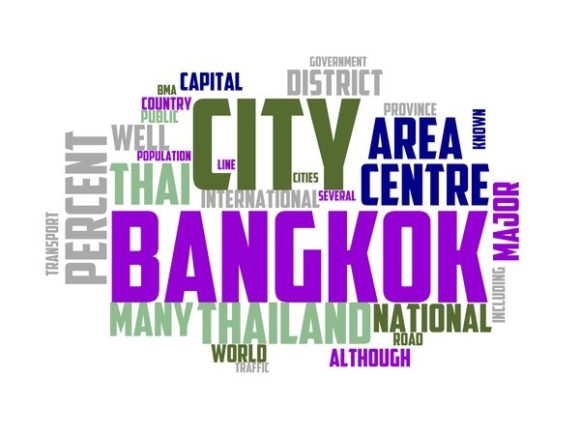
Bangkok Typography Banner: A Hand-Drawn Wordcloud for Versatile Creative Use
The Bangkok Typography Banner is a distinctive digital design asset centered around a vibrant, hand-drawn wordcloud — not as data visualization, but as expressive typographic art. Unlike algorithmically generated word clouds or minimalist sans-serif banners, this piece emphasizes organic line work, playful letterforms, and intentional color layering. It’s crafted with physical media sensibility — think ink washes, subtle texture overlays, and uneven baselines — yet delivered as a high-resolution, scalable vector or PNG file optimized for both print and digital workflows.
What sets the Bangkok Typography Banner apart isn’t just its aesthetic, but its functional flexibility. It’s designed from the ground up to move fluidly across surfaces and contexts: from cotton tote bags and ceramic mugs to editorial layouts and textile repeats. Its composition avoids rigid grids or fixed hierarchy, allowing designers and makers to crop, rotate, layer, or isolate individual words without breaking visual cohesion.
How It Fits Within Broader Design Resource Categories
When evaluating typographic assets, users often encounter three broad categories: systematic fonts, decorative display typefaces, and standalone illustrative typography. The Bangkok Typography Banner belongs firmly in the third group — but with notable nuance. Unlike single-word typographic illustrations (e.g., “Joy” drawn as a sunburst), it offers semantic density: multiple interconnected words — often inspirational, action-oriented, or culturally resonant — arranged to suggest rhythm and balance rather than literal meaning.
This makes it functionally different from a font. You can’t type new text with it. Nor does it behave like a clipart-style icon pack — there’s no modular consistency between letters; each word has unique weight, tilt, and spacing. That’s intentional. Its strength lies in evoking mood and energy, not enabling typographic precision. For projects requiring editable, multilingual, or accessible text, a well-chosen variable font paired with thoughtful layout remains more appropriate.
Practical Strengths Across Real-World Applications
Where the Bangkok Typography Banner excels is in tactile, human-centered applications. Consider these examples:
- Clothing & accessories: Printed on organic cotton tees or embroidered onto linen pouches, its hand-drawn quality softens mass production, lending authenticity to small-batch brands.
- Home décor & stationery: Applied to pillow covers or notebook covers, it holds up at medium scale without pixelation — especially when sourced in vector format — and introduces warmth missing from digitally uniform graphics.
- Promotional materials: On event flyers or workshop posters, it serves as both headline and visual anchor, reducing the need for layered type treatments while maintaining readability at arm’s length.
- Package design & retail tags: Its compact density works well on small-format labels or gift box stamps, where space is constrained but personality matters.
Because the color palette is intentionally varied — not monochromatic or gradient-based — it adapts well to spot-color printing or limited-palette screen printing. Designers report fewer color-matching adjustments compared to photorealistic illustrations or complex gradients.
Tradeoffs and Situational Limitations
No design resource suits every scenario — and understanding where the Bangkok Typography Banner falls short is as important as knowing where it shines.
It is not ideal for projects requiring strict brand consistency across touchpoints. If your identity relies on precise kerning, optical alignment, or responsive text scaling (e.g., web interfaces or multi-language apps), this banner won’t integrate cleanly. Its charm is in its irregularity — which becomes a liability when uniformity is the goal.
Accessibility is another consideration. While visually rich, it doesn’t support screen readers, nor does it allow dynamic resizing of individual words for legibility. For public-facing signage or educational printables where clarity must override style, pairing it with clean supporting type — or choosing a more structured typographic solution — is advisable.
Also worth noting: because it’s hand-drawn, some characters may sit at unexpected angles or overlap slightly. This adds character in print or embroidery but can complicate precise die-cutting or laser engraving unless files include clear cut lines or separation guides — something to verify before ordering production-ready assets.
Comparing Approaches: When to Choose Bangkok Typography Banner vs. Alternatives
Suppose you’re designing a wellness retreat brochure. You want to convey calm, intention, and connection — but avoid clichéd lotus motifs or overused serif quotes. A Bangkok Typography Banner with words like “breathe,” “still,” “listen,” and “root” arranged loosely across the cover offers immediate emotional resonance. It feels personal, not stock.
By contrast, if you’re building a SaaS dashboard header, that same banner would disrupt usability. Here, a lightweight, highly legible system font with adjustable weight and width — perhaps paired with a subtle geometric icon — delivers better function and scalability.
Similarly, for a children’s book illustration, the Bangkok Typography Banner might serve well as a background texture behind hand-lettered chapter titles — but wouldn’t replace custom-drawn lettering tailored to narrative tone and age-appropriate readability.
The decision hinges less on “quality” and more on intent. Ask: Is the priority expressive impact, material authenticity, or cross-platform adaptability? If the first two dominate, the Bangkok Typography Banner warrants serious consideration. If the third is non-negotiable, explore modular type systems or parametric design tools instead.
Integration Tips for Best Results
To maximize effectiveness, consider how the Bangkok Typography Banner interacts with surrounding elements:
- Respect negative space: Its density benefits from breathing room. Avoid crowding it with dense body copy or competing patterns.
- Test scale early: View it at actual size on target substrates — a wordcloud that reads beautifully on an A2 poster may blur key details on a 2-inch sticker.
- Check color mode: For fabric printing, ensure the file is provided in CMYK or Pantone references — RGB-only versions may shift unexpectedly on textiles.
- Layer thoughtfully: When using digitally, place it beneath — not over — critical text. Its visual weight can overwhelm foreground information if mispositioned.
Many users find success by treating it as a foundational texture rather than a focal headline: reducing opacity, applying subtle blending modes, or masking portions to reveal underlying photography or gradients.
Making an Informed Choice
The Bangkok Typography Banner occupies a specific niche: expressive, craft-aligned typography for tangible, human-scale applications. It reflects a broader shift toward valuing imperfection, tactility, and narrative texture in visual communication — especially among independent makers, boutique studios, and educators seeking alternatives to algorithm-driven design.
That said, its value isn’t universal. Evaluate your project’s core needs — audience context, production constraints, accessibility requirements, and long-term maintainability — before committing. Compare it not just to other wordclouds, but to the full spectrum of typographic tools available: from open-source fonts and generative type scripts to custom lettering commissions.
When aligned with the right purpose, the Bangkok Typography Banner does more than decorate — it invites pause, signals care in execution, and quietly reinforces the idea that how something looks is inseparable from how it feels to hold, wear, or live with.